
You’ve seen it during a heavy downpour: a miniature Niagara Falls pouring over the side of your gutter. It’s messy, for sure. But what if that waterfall isn’t the real problem? In reality, it’s just a warning sign for a much more destructive issue.
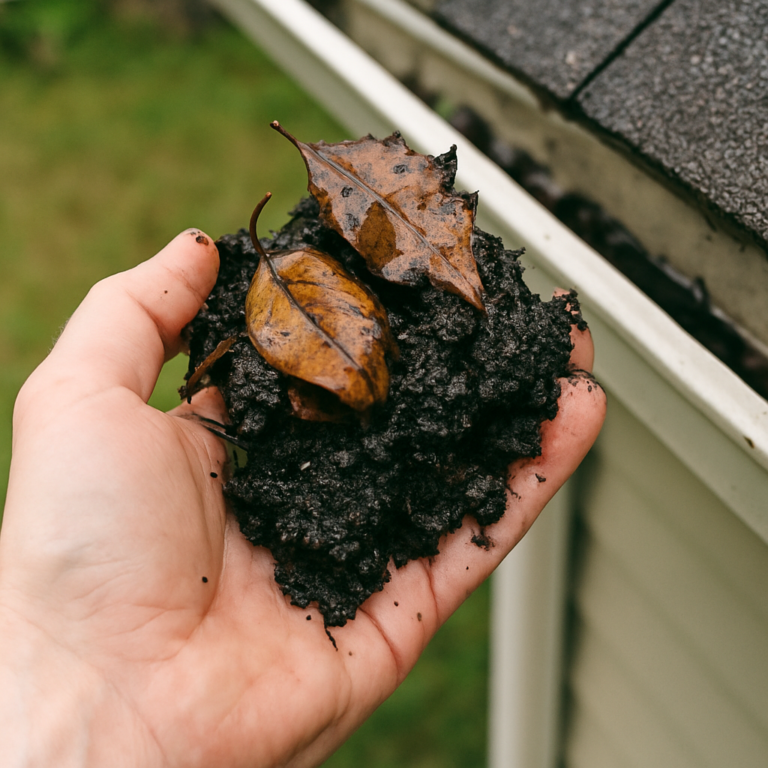
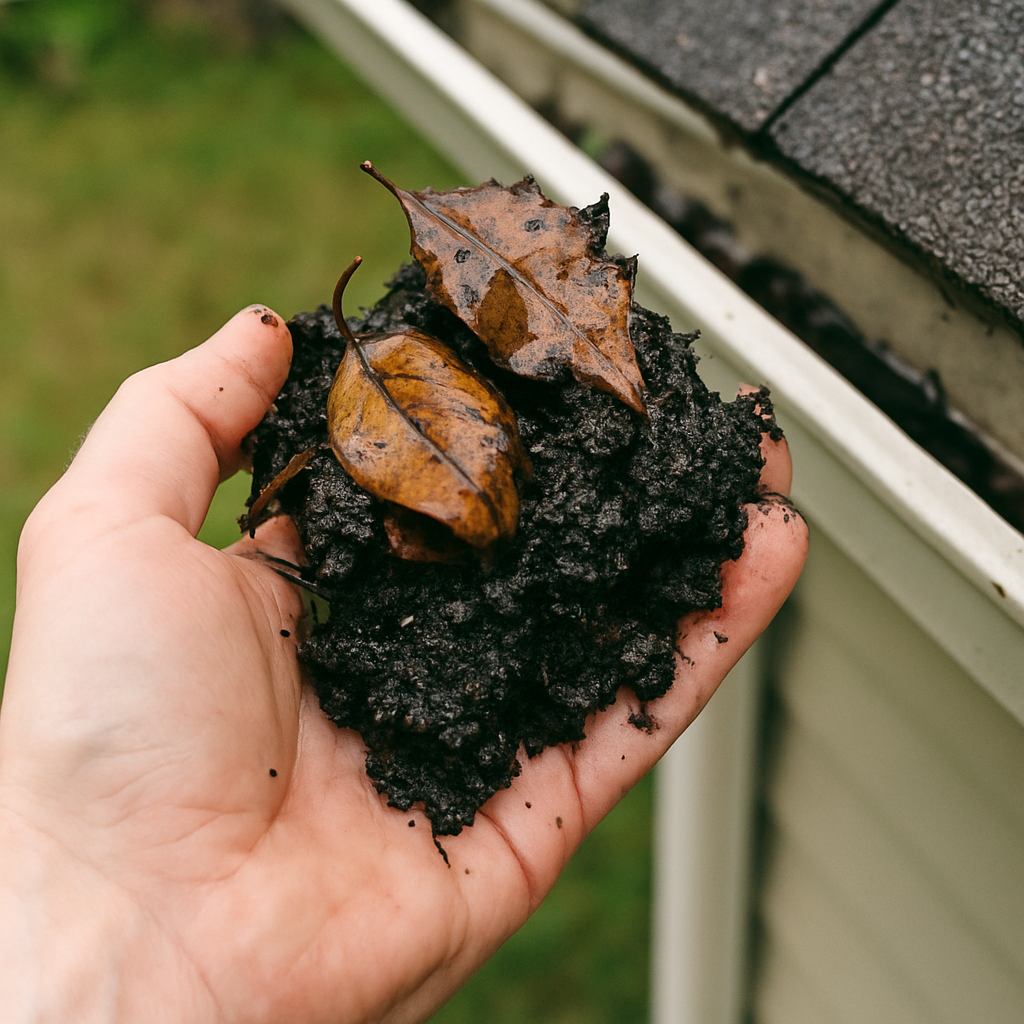
The true danger is the heavy secret hiding inside your gutters. Over time, leaves and shingle grit compact into a dense, waterlogged sludge that can weigh a shocking amount. US-based industry experts at the National Center for Healthy Housing note this debris can hold water like a sponge, putting immense strain on your roofline. That constant weight and moisture create a direct path to rotted roof boards, cracked foundations, and even pest infestations.
More Than Just Leaves: What’s Really Turning Your Gutters into a Heavy, Destructive Sponge
It’s easy to picture a gutter clog as a pile of light, dry leaves. The reality, however, is much heavier. As leaves, twigs, and dirt sit in your gutters, they decompose into a dense, muddy sludge. This organic muck acts like a sponge, soaking up rainwater and becoming surprisingly heavy all on its own.
What truly tips the scales, though, is a hidden ingredient: shingle granules. With every storm, your roof sheds thousands of these tiny, asphalt-covered particles. This “sand” washes into your gutters and settles at the bottom of the sludge, adding significant weight and abrasive texture.
Instead of weighing a few pounds, a ten-foot section can easily exceed 50 pounds—like hanging a string of small breeze blocks from the edge of your roof. This constant, immense strain pulls on the screws and fasteners, threatening to rip your gutters right off the boards they’re attached to.
How a Clogged Gutter Secretly Rots Your Home from the Top Down
Beyond the sheer weight of the debris, the trapped moisture creates a much more insidious problem. Because the soggy gunk inside a clogged gutter rarely dries out, it keeps the board it’s attached to in a state of constant dampness, turning a seasonal nuisance into a year-round threat.
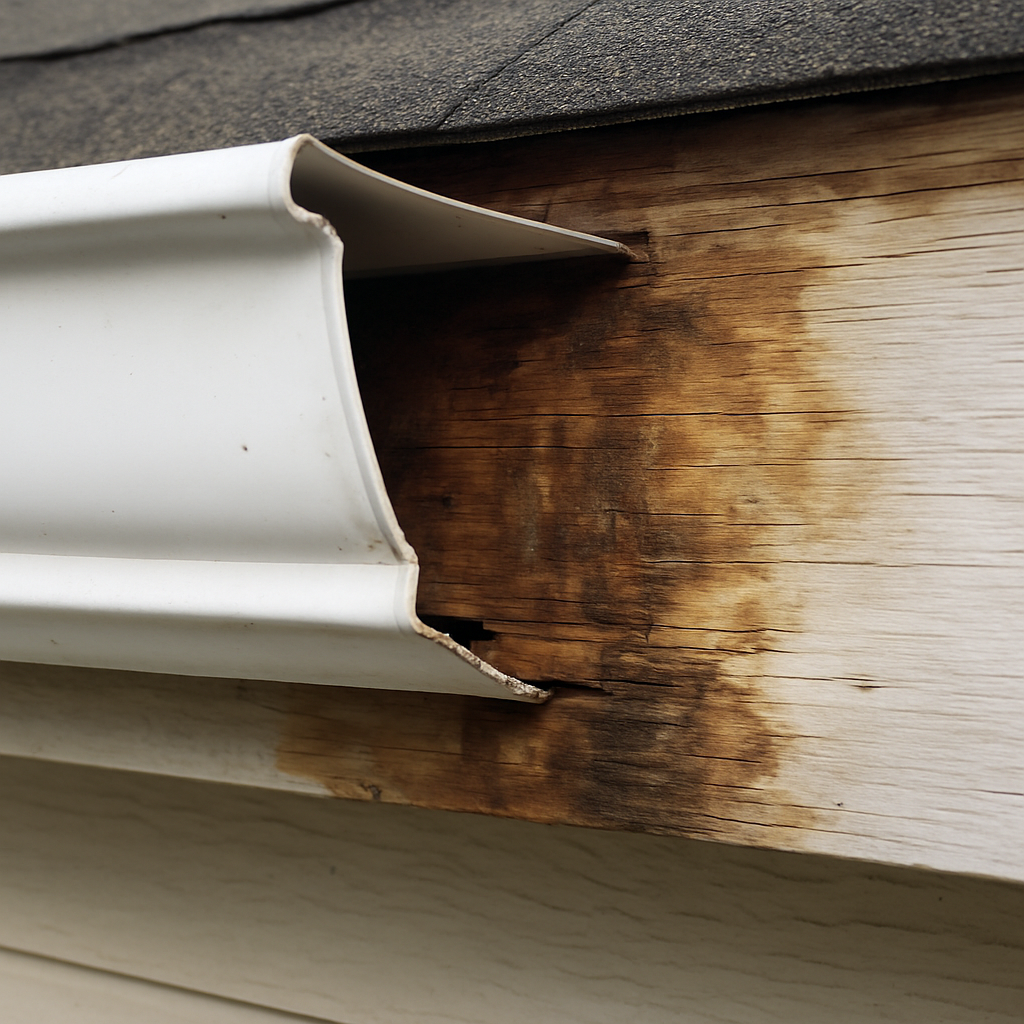
That long, straight board running right behind your gutters is called the fascia. Think of it as the trim that protects the vulnerable edges of your roof rafters. But since it’s typically made of wood, it has one major weakness: it can’t stand up to perpetual moisture.
When your gutter acts like a saturated sponge pressed against the fascia day after day, it creates the perfect environment for wood rot. The paint begins to peel, the wood softens to the consistency of wet cardboard, and its ability to hold heavy gutter fasteners is destroyed. These dark stains and warped boards are clear signs of roof damage from blocked gutters.
The cost of fascia board water damage repair—which involves removing gutters, replacing wood, and painting—can easily run into the thousands. Suddenly, the small price of a professional cleaning seems like a bargain.
The £8,000 Problem: How Gutter Neglect Can Crack Your Foundation
Damage from overflowing gutters often travels downward. Instead of being safely routed away from your home, rainwater cascades directly to the base of your house, pooling in the soil right up against your foundation. Over time, this constant dumping of water super-saturates the ground in a way that normal rainfall doesn’t. The soil around your home becomes a heavy, unstable sludge that can’t drain properly.
This waterlogged soil creates immense hydrostatic pressure. To understand the force involved, picture a full swimming pool. The same powerful pressure that pushes on the deep end of the pool is now pushing on your foundation from the outside. Concrete, while strong, can’t always withstand that constant shove. Eventually, cracks can form, letting water seep into your basement or cellar and threatening the structural integrity of your home.
A major foundation repair can easily cost upwards of £8,000. Unfortunately, that soggy ground creates another issue: your gutters might be rolling out the welcome mat for pests.
Are Your Gutters Rolling Out the Welcome Mat for Pests?
That stagnant, mucky water collecting in clogged gutters is more than just heavy—it’s an ideal breeding ground for pests. Mosquitoes, for instance, can lay hundreds of eggs in even a small amount of standing water. If you feel like you’re constantly fighting off bugs in your own garden, a dirty gutter system is a common and often overlooked culprit.
Beyond flying insects, the dense, decomposing sludge is an all-you-can-eat buffet for other critters. Carpenter ants and termites are drawn to the constant moisture and decaying organic material, turning your roofline into a bustling highway for pests that can cause serious structural damage.
Worst of all, when that moisture causes the wooden boards behind your gutters to soften and rot, it’s like leaving the door wide open. Those pests now have an easy entry point directly into your home’s structure.
Beyond the Waterfall: 3 Telltale Signs of a Gutter Clog You Can Spot from the Ground
You don’t need a ladder to know you have a problem. While a gushing overflow during a storm is obvious, other, more subtle signs of clogged gutters are visible right from your lawn, warning you that damage is already underway.
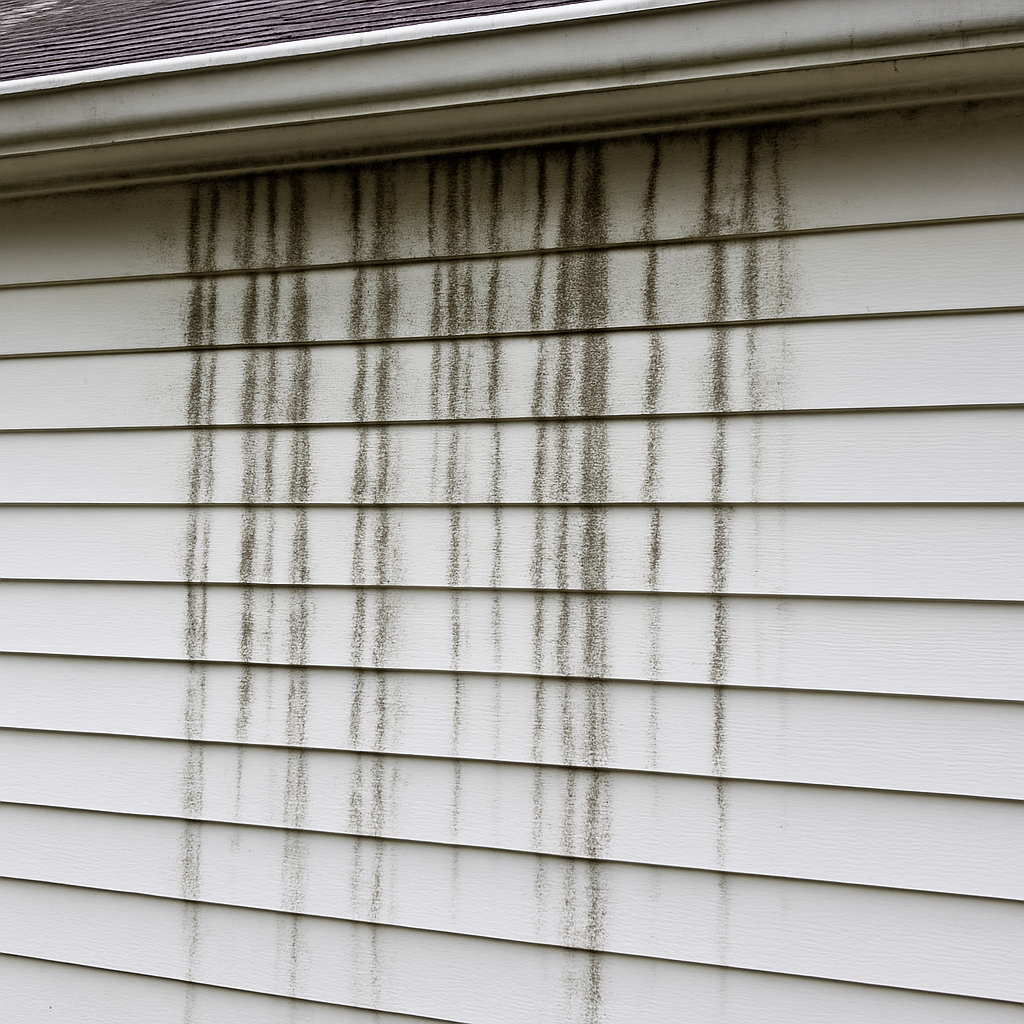
The most common clue is dark, ugly stains running down your cladding. Often called “tiger stripes,” these streaks are caused by dirty, stagnant water consistently spilling over the edge. They are a clear sign that water isn’t flowing where it should.
Look for these other two major red flags:
- Gutters that are Sagging or Pulling Away: If your gutters are bowing in the middle or detaching from the house, they are failing under the immense weight of waterlogged debris.
- Plants or Weeds Growing: Seeing green sprouts? It means your gutter has collected enough dense muck to become a garden bed—proof that it’s completely full.
Spotting any of these issues means it’s time to take action before the problem gets worse.
From Problem to Prevention: Your Gutter Maintenance Action Plan
An overflowing gutter is a clear warning sign for bigger problems like rotted wood, a cracked foundation, and unwanted pests. Viewing your gutters as a critical line of defence for your home is the first step in protecting it.
After the next rain, walk around your property and look for the telltale signs of overflow, staining, or sagging. If you see them, it’s time to explore gutter cleaning solutions. While safe DIY methods can be effective, a call to a professional is one of the smartest investments you can make, especially if your roof is high or you’re unsure.
Think of regular gutter maintenance not as a cost, but as an inexpensive insurance policy. That small annual investment is your best defence against a devastating future repair bill, giving you invaluable peace of mind every time the clouds roll in.