
Those ugly black streaks on your roof aren’t just dirt or grime. They’re a living organism—an algae called Gloeocapsa magma—that is eating the limestone filler in your shingles. Many homeowners wonder what causes these stains, not realising it’s a colony feasting on their home.
Ignoring this problem allows the damage to spread. As the algae feeds, it loosens the protective granules that shield your roof from the sun, making shingles brittle. Green moss is even more destructive; it acts like a tiny sponge, trapping water against the surface, which can lead to rot and shorten your roof’s lifespan.
Fortunately, evicting these unwanted tenants is manageable with the right method. The most common approach, pressure washing, can destroy your roof, but there is a safe way to restore your home’s kerb appeal and protect your investment.
Soft Washing vs. Pressure Washing: The Critical Difference
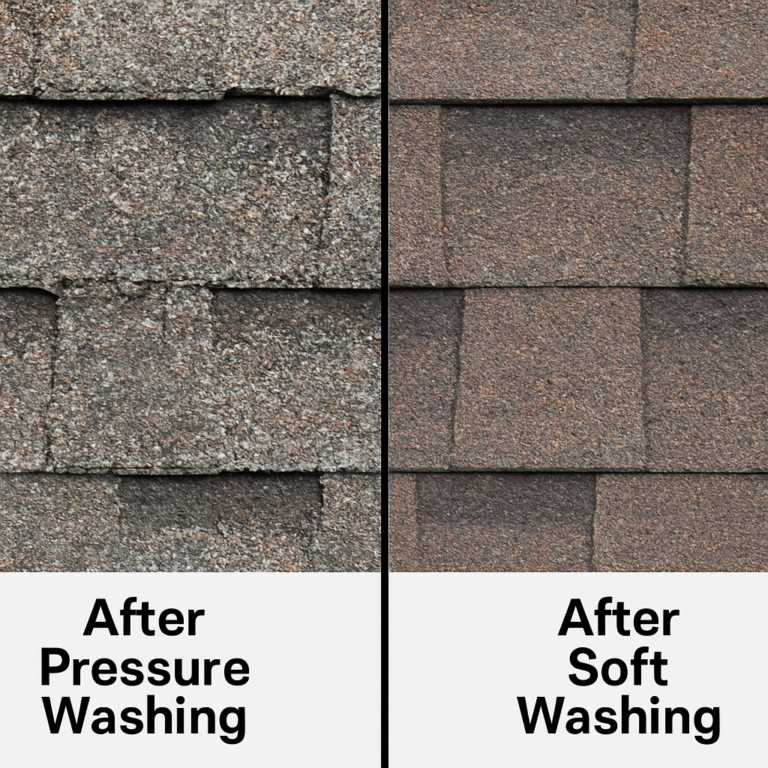
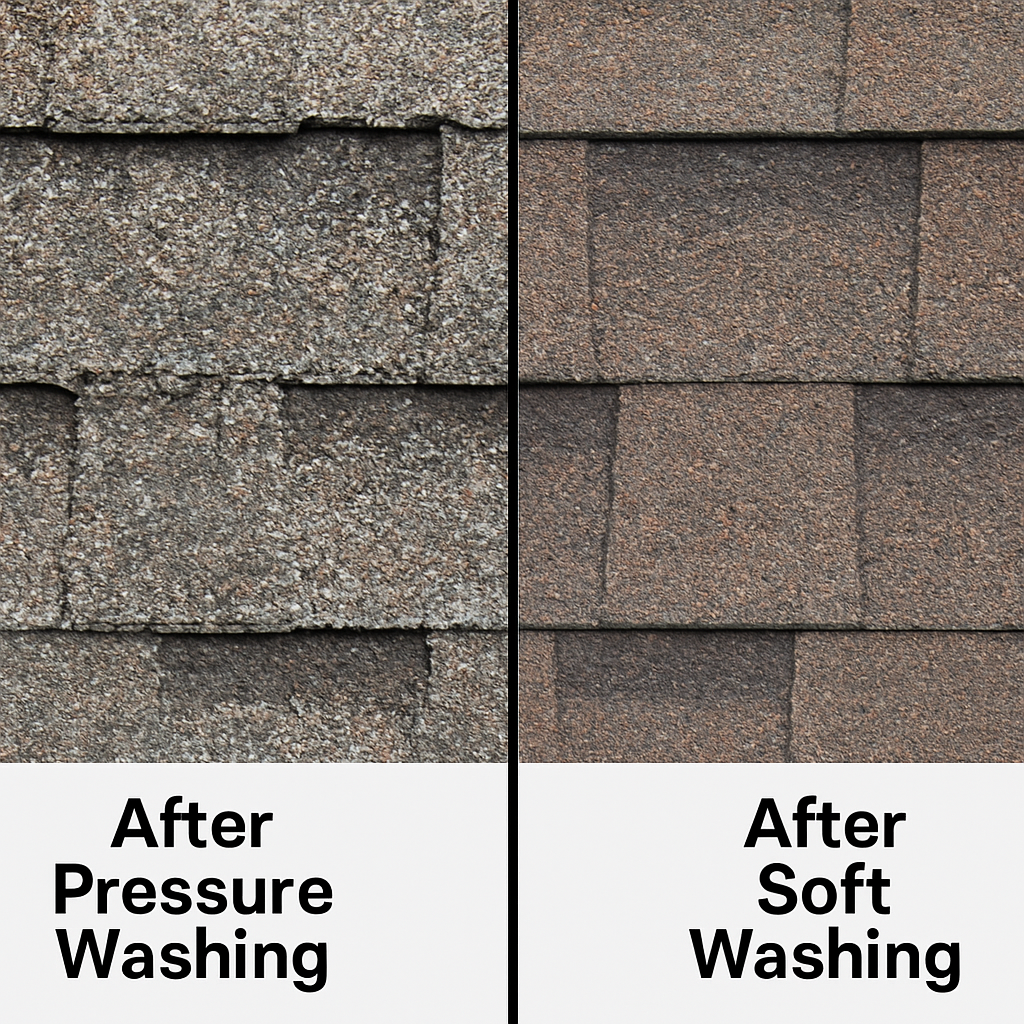
When you see stubborn stains, your first thought might be to blast them away with a pressure washer. It’s a common instinct, but applying that logic to your roof is a costly mistake. Your asphalt shingles are covered in tiny, sand-like shingle granules that protect them from sun and weather. Using high pressure strips away that essential protective layer, causing irreversible damage.
Instead, the industry-standard method is soft washing. This technique uses a gentle, low-pressure stream of water—often no stronger than a garden hose—to apply a specialised cleaning solution. Rather than relying on destructive force, the solution does the real work by killing the algae and moss at the root, allowing it to be safely rinsed away without harming your shingles.
The difference in outcome is critical. A pressure-washed roof may look clean for a short time, but the granule loss leads to premature ageing and a shorter lifespan. More importantly, this aggressive cleaning can void your roof’s warranty. For this reason, major roofing manufacturers universally recommend soft washing as the only safe and approved method.
How Soft Washing Kills Algae and Moss at the Root
The secret to effective soft washing lies in the cleaning solution, not the water pressure. The solutions contain an algaecide that safely kills the organisms and special soaps called surfactants. These surfactants help the solution cling to your sloped roof, giving it time to work instead of just running off into the gutters.
Once applied, the solution needs time to work. This “dwell time” allows the cleaning agents to penetrate and neutralise algae, moss, and lichen at their root. Skipping this step is like pulling the top off a weed and leaving the root behind—the problem will just grow back.
Because the solution does all the work, the final rinse only needs to be a gentle, low-pressure stream. This safely carries away the now-dead organic matter without blasting away your shingle granules. The result is a roof that is clean right down to the microscopic level, delivering lasting results.
DIY Roof Cleaning: A Realistic Look at the Risks
While DIY roof cleaning is possible, it’s a job where the risks can quickly outweigh the rewards. Beyond a ladder and garden hose, you’ll need the right pump sprayer, specific cleaning agents, and—most importantly—proper safety equipment.
The single greatest risk isn’t damaging your shingles but severe personal injury. A wet, sloped roof is an extremely hazardous work environment. Professional cleaners use safety harnesses, specialised non-slip footwear, and have extensive experience working at heights. A fall from a roof can be life-altering.
Finally, there’s the challenge of controlling chemical runoff. The same solution that kills algae can harm your landscaping, stain your cladding, or etch your windows if not properly managed. Professionals are trained to pre-wet and rinse surrounding surfaces to neutralise runoff, a crucial step DIYers often overlook.
Ask Yourself Before You DIY:
- Am I comfortable working on a tall ladder and a wet, sloped roof?
- Do I own or can I rent the proper safety gear, like a fall-protection harness?
- Do I have a clear plan to mix chemicals and protect my home’s cladding and plants from runoff?
- Is the potential saving worth the significant safety risk involved?
How to Choose the Right Roof Cleaner
When vetting a roof cleaning company, focus on three critical areas to ensure a safe and effective job.
First, confirm their method. Ask, “Do you use a soft wash system?” If they mention “pressure washing,” politely decline. High pressure strips protective granules from shingles, causing permanent damage. A true professional uses low-pressure soft washing, the only method recommended by roofing manufacturers.
Second, verify their insurance. A reputable company must provide proof of both Public Liability (to cover accidental damage to your home) and Employer’s Liability insurance (to protect you financially if a worker is injured on your property). Hiring a firm without both is a significant financial risk.
Finally, review their process. A detailed quote should explain how the crew will protect your landscaping, cladding, and windows from the cleaning solution. This demonstrates a commitment to protecting your entire property, not just cleaning the roof.
Your Action Plan for a Lasting, Clean Roof
Now that you can identify roof stains as living organisms and understand that a pressure washer is the enemy, you can protect your home from damage hiding in plain sight.
Your action plan is simple:
- Inspect your roof for black streaks or moss growth.
- Choose your method: a well-researched DIY approach or a vetted professional.
- Prevent future growth by trimming overhanging branches.
Most homeowners find a roof wash is needed every 3-5 years to maintain the roof’s health and appearance. This isn’t just about kerb appeal; it’s about taking control and preserving your biggest investment, one safe wash at a time.